The problem
The catalogue runs from luxury installations down to everyday clearance. A single flat product grid serves neither end: someone spending thousands on a sauna needs specs, dimensions, delivery expectations and a returns policy before they will commit, while a bargain browser needs speed. A new store also has no brand recognition, so every trust signal has to come from the page itself.
What we built
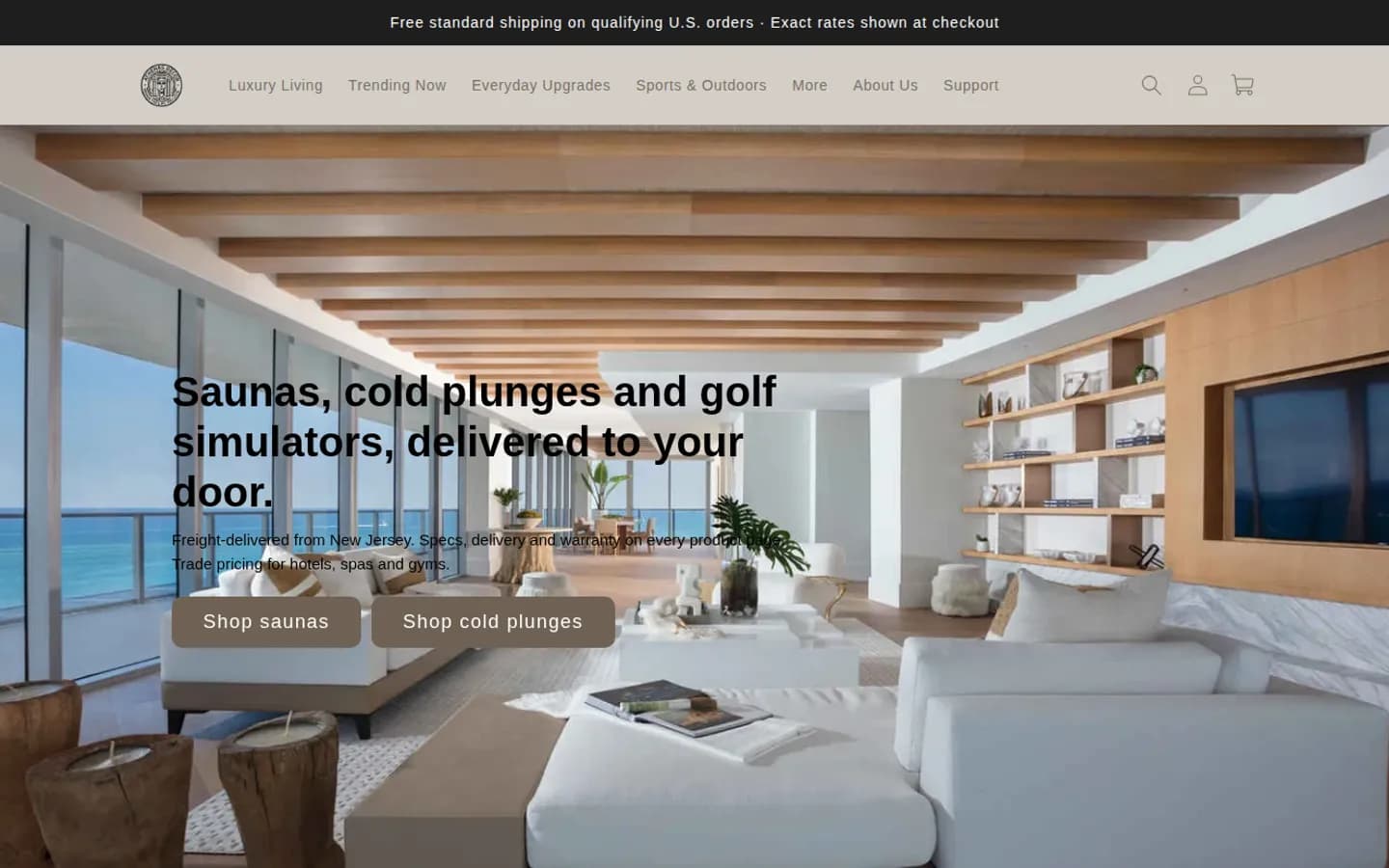
- Four-tier navigation (Luxury Living, Trending Now, Everyday Upgrades, Sports & Outdoors) so a sauna and a kitchen gadget never compete in the same grid
- High-ticket product pages carrying what a considered purchase needs: specs, dimensions, freight delivery and warranty stated before the add-to-cart, not after it
- Trade pricing for hotels, spas and gyms, opening a B2B revenue line alongside retail
- Trust surfaced rather than buried: shipping, returns, secure checkout and reviews placed where hesitation happens
- Self-serve support (order tracking, shipping, returns and FAQ pages) answering the questions that otherwise arrive as emails
- Collection structure written around buying-intent search terms, and mobile-first merchandising for Instagram and TikTok traffic
The result
- One catalogue serving both a four-figure considered purchase and an impulse buy
- Shipping, returns and tracking answered on the page instead of by email
- Category pages structured to rank for product terms people actually search